

Fundamental Concepts in Cybersecurity: Best Guide for ISC2 CC and CISSP Candidates
Most people who fail the ISC2 CC or stall halfway through CISSP prep don’t fail because the material is too […]
Build practical cybersecurity knowledge through clear guides, certification preparation, training resources, and hands-on learning. Explore essential security concepts and develop skills for cybersecurity exams, careers, and real-world challenges.
Most people who fail the ISC2 CC or stall halfway through CISSP prep don’t fail because the material is too […]
Zero Trust is not a product you can buy off a shelf. It is not a piece of software or a specific technology. It is an architecture, i.e., a way of designing and operating your entire security posture, built around the assumption that threats exist both inside and outside your network at all times. It is a modern cybersecurity approach that assumes no user, device, or system should be trusted automatically, even if it is already inside the network.

Computer networks revolve around data; thus, comprehending network functionality requires an understanding of data. This article provides a step-by-step explanation of what is data in computer networks, starting with the difference between data and information. It then demonstrates how computers store data as bits, how bits are organized into bytes, and how encoding techniques enable the digital representation of letters, numbers, symbols, pictures, audio, and video.
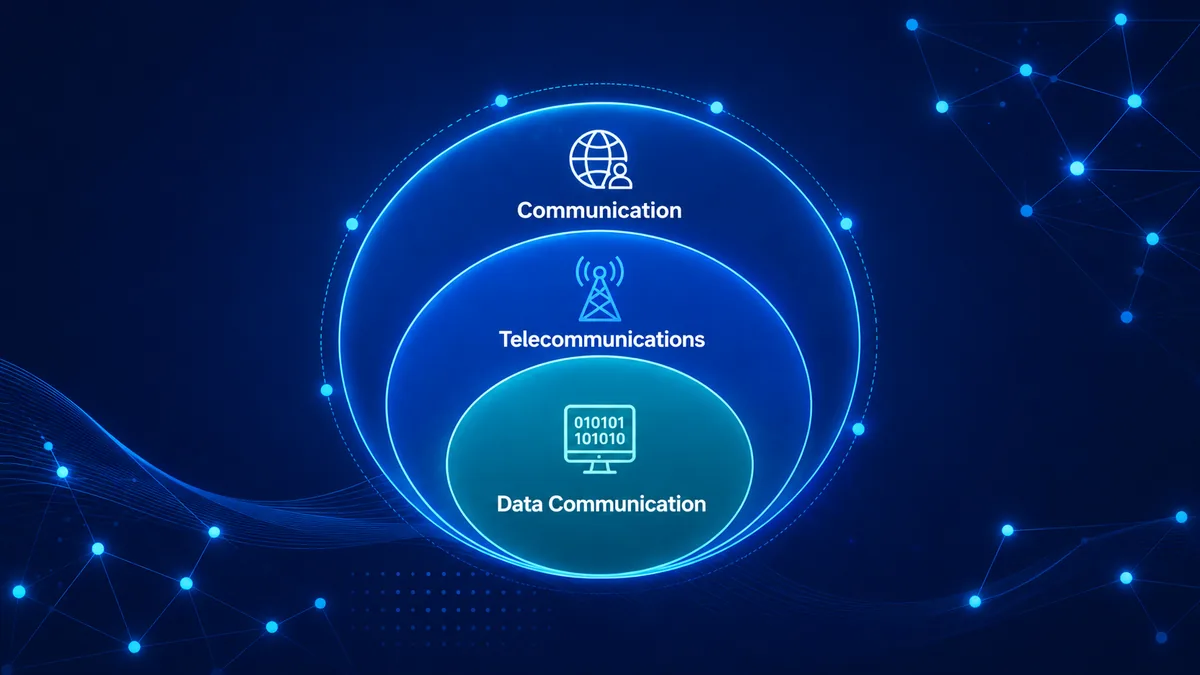
Communication vs telecommunications vs data communication is an important ICT topic because these terms are often used together, but they do not mean exactly the same thing. Communication is the broadest concept; telecommunications involves technology-based signal transmission, and data communication specifically refers to digital binary data exchanged between computing devices.

This CISA Domain 4 revision guide explains IT operations management, network security, wireless security, DBMS architecture, database controls, and monitoring and logging in an exam-focused way. You will learn the key audit concerns, high-value comparisons, and practical exam tips needed to answer scenario-based CISA questions.

Computer networks are the most important pillar of “information and communications technologies,” i.e., ICT domain. ICT refers to any digital technology used to manage information and facilitate communication, such as hardware, software, networks, and the Internet. It combines computation and telecommunications to improve data storage, transport, and processing

Cyber risk is business risk, but many organizations still report it using technical metrics that do not map to enterprise risk appetite. This guide shows how to translate cyber threats into business impact, map them to enterprise risk categories, define cyber risk appetite statements, and integrate cybersecurity into board level governance.
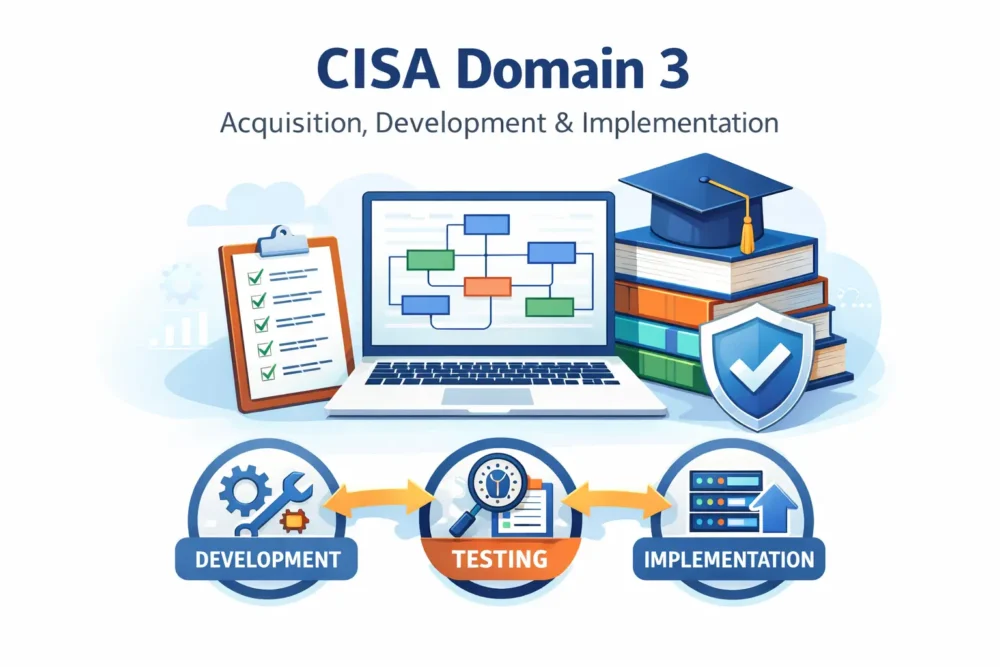
CISA Domain 3 focuses on how information systems are planned, acquired, developed, tested, implemented, and maintained in alignment with business objectives. From a CISA exam and practitioner perspective, this domain emphasizes controls, risk management, governance oversight, and assurance activities across the system development lifecycle.
Introduction. CISA Domain 2 focuses on the structures, frameworks, and control mechanisms that guide strategic IT decision-making across an enterprise.
Domain 5 focuses on the practical aspects of information security, such as Cryptography, Data Handling, Security Controls, and Social Engineering.