Beyond Contracts: Rethinking Third Party Cyber Risk in a 2026 Connected World
Introduction Third party cyber risk is becoming one of the biggest security challenges for organizations as vendors, suppliers, cloud providers, […]
Introduction Claude Chrome Extension incident highlighted that how zero-click GenAI vulnerabilities can turn trusted AI systems into attack pathways The
Cyber risk is business risk, but many organizations still report it using technical metrics that do not map to enterprise risk appetite. This guide shows how to translate cyber threats into business impact, map them to enterprise risk categories, define cyber risk appetite statements, and integrate cybersecurity into board level governance.
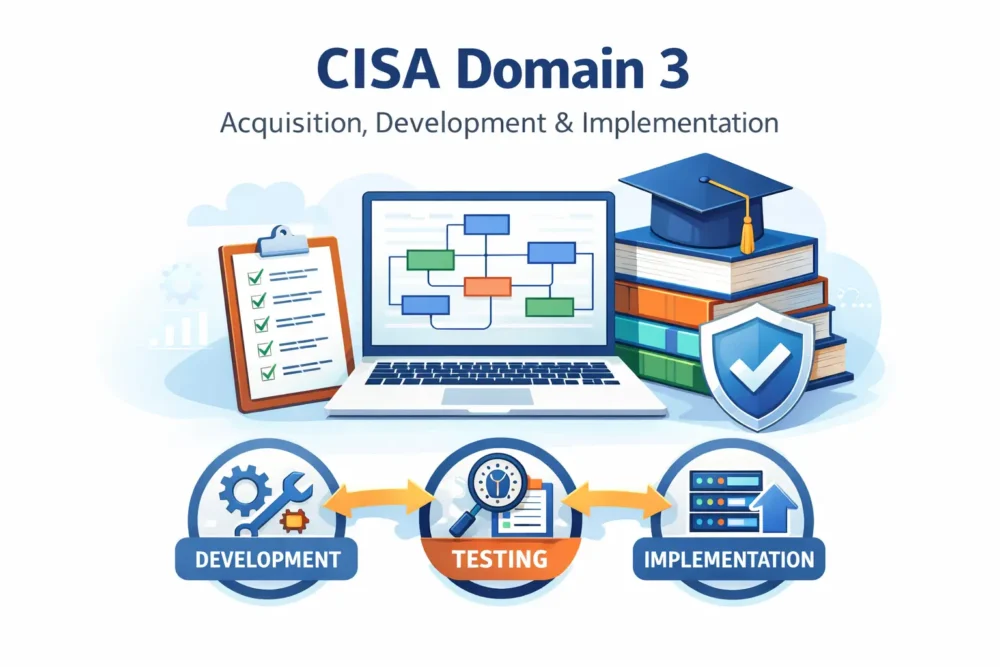
CISA Domain 3 focuses on how information systems are planned, acquired, developed, tested, implemented, and maintained in alignment with business objectives. From a CISA exam and practitioner perspective, this domain emphasizes controls, risk management, governance oversight, and assurance activities across the system development lifecycle.
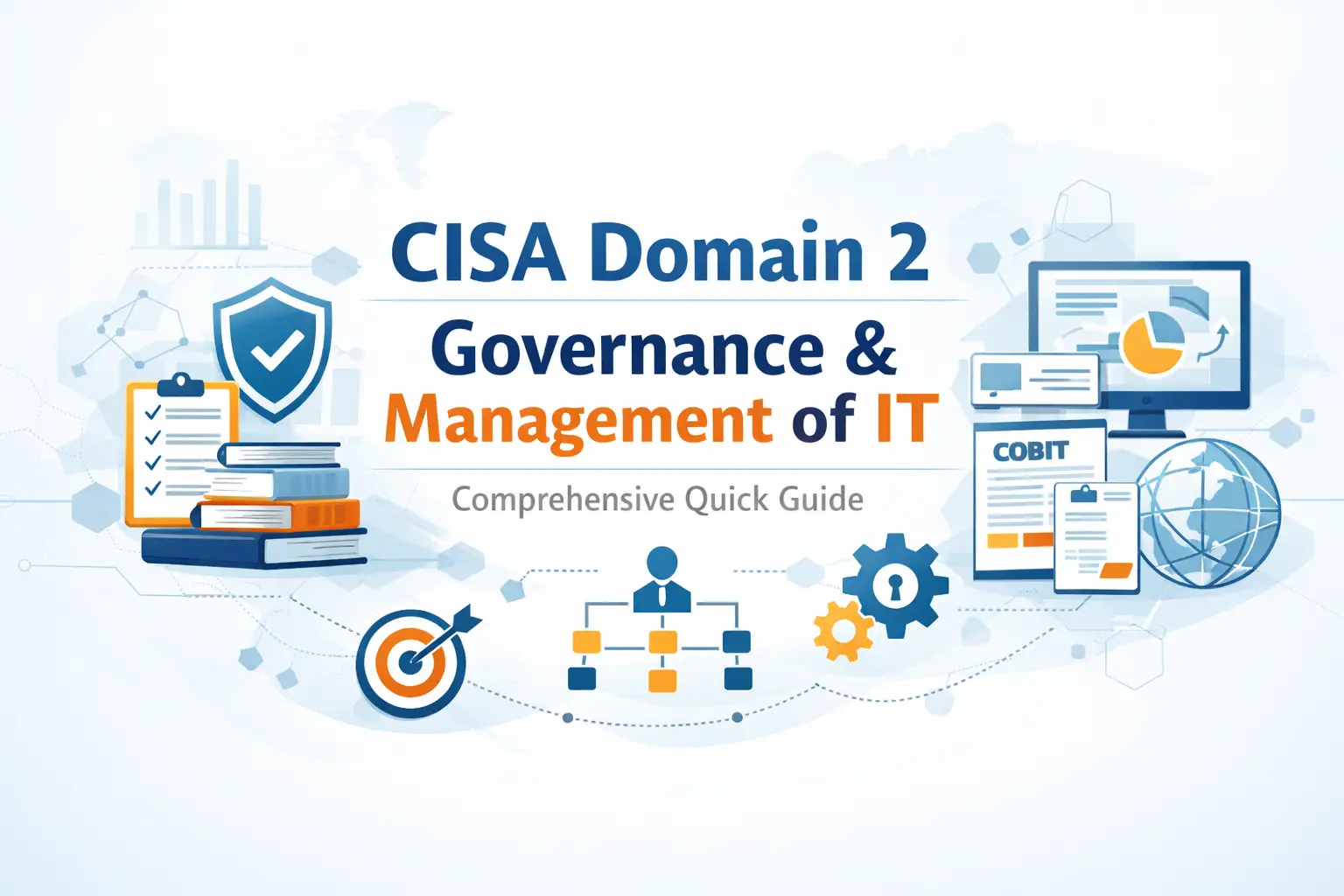
Introduction. CISA Domain 2 focuses on the structures, frameworks, and control mechanisms that guide strategic IT decision-making across an enterprise.
The first domain of the CISA prep course, “Information Systems Auditing Process,” forms the critical foundation for the entire CISA certification. Success here requires not only conceptual understanding but also practical knowledge of audit techniques, standards, and real-world scenarios. This guide combines foundational principles with advanced insights, equipping you to excel both in the exam and your auditing career.
Control Self Assessment (CSA), a governance tool that enables process owners to regularly assess and enhance their own control environment, is being used by top organizations as a complementary measure. It provides management with a continuous, fact-based assessment of the effectiveness of security and compliance procedures. CSA helps close the gap between executive assurance and operational ownership.
The gender gap in cybersecurity remains one of the most persistent challenges in the digital era. Despite significant development and great demand for talent, there is still a gender gap in information security. Women only make up 26–28% of the worldwide cybersecurity workforce (ISC², 2024), which is lower than the norm for the ICT industry as a whole (35–40%).
Post Quantum Cryptography Companies are facing challenges in safeguarding data against future quantum attacks while maintaining compatibility. Today’s public-key encryption faces a real long-term threat as quantum computing moves from theory to reality.
While artificial intelligence (AI) has transformative possibilities, it also poses novel cybersecurity threats that conventional security measures might not be able to adequately counter. The National Institute of Standards and Technology (NIST) has acknowledged this by publishing a concept paper on Control Overlays for Securing AI Systems (COSAIS).