
Introduction
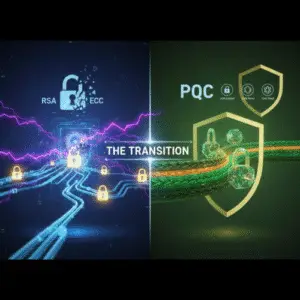
Post Quantum Cryptography Companies are facing challenges in safeguarding data against future quantum attacks while maintaining compatibility. Today’s public-key encryption faces a real long-term threat as quantum computing moves from theory to reality. If quantum computers are powerful enough, they may use Shor’s algorithm to crack algorithms like RSA and ECC, which safeguard the majority of internet traffic. The international security community has been moving towards post-quantum cryptography (PQC)—algorithms that are safe even from quantum adversaries—to mitigate this risk.
Although numerous organisations have already initiated the implementation of hybrid or post-quantum cryptographic solutions, the internet’s full quantum resilience remains an ongoing challenge.
Tracking real-world deployments alongside Top Post Quantum Cryptography Companies
A number of major technology providers (Post Quantum Cryptography Companies) have started deploying hybrid post-quantum cryptography, combining classical and quantum-resistant algorithms to protect against both current and future threats.
| Service / Application | What Was Deployed | Algorithm(s) | Scope / Impact | Deployment Status |
| Signal | Introduced the Sparse Post-Quantum Ratchet (SPQR) integrating a post-quantum KEM into the Signal Protocol for forward secrecy resilient to quantum attacks. | Classical: X25519 / Double Ratchet PQ: ML-KEM (Kyber-based hybrid) |
End-to-end encrypted messaging between Signal clients. | In Production (2024–2025) |
| Google Chrome / QUIC | Added hybrid TLS 1.3 / QUIC key agreement combining X25519 with Kyber to secure browser-server handshakes. | X25519 + Kyber / ML-KEM | Browser TLS and QUIC connections between Chrome and Google or Cloudflare servers. | In Production |
| Cloudflare | Rolled out hybrid PQC support at the CDN edge and optional PQC between edge and origin servers. | X25519 + Kyber | TLS connections for websites hosted on Cloudflare. | In Production |
| Apple iMessage (PQ3) | Announced and deployed PQ3, a new hybrid post-quantum encryption protocol for iMessage. | Apple EC + PQ hybrid (Kyber-family) | iMessage on updated iOS/macOS devices. | In Production (2025) |
| Open SSH (via liboqs) | Experimental builds using Open Quantum Safe (OQS) integration for hybrid SSH key exchanges. | ECDH / RSA + Kyber / other PQC | Research and early adoption in controlled environments. | Prototype / Research |
| Wire | Built its Message Layer Security (MLS) architecture with cryptographic agility for PQ migration. | MLS classical suites, PQ-ready | Messaging & collaboration platform. | Prepared / Rolling Out |
| Proton (Mail & PGP) | Integrating quantum-safe options into OpenPGP toolchains and ProtonMail services. | RSA / ECC + PQ KEM (testing) | Secure email; staged rollout. | Prepared / Testing |
PQC is no longer just a theory. Hybrid post-quantum architectures are becoming more and more popular in real-world applications, especially those that safeguard sensitive or long-term information. The transition from pilot to widespread deployment on the internet is far from finished, though.

Why Making the Internet Fully Quantum-Resilient Is Still a Challenge
Even with these advancements, it is still difficult for post quantum cryptography companies to incorporate quantum-resilient cryptography into TLS and internet infrastructure. There are still a number of performance, architectural, and practical issues impeding the shift.
a. Size and Performance Overheads
Compared to conventional algorithms, lattice-based PQ algorithms (such as Dilithium for signatures or Kyber for key exchange) require substantially larger keys and ciphertexts. While Kyber768 public keys are more than 1 KB, an elliptic-curve key is about 32 bytes. Particularly over mobile networks, these higher payloads cause packet fragmentation or failed connections by inflating TLS handshake sizes. Result: In certain situations, slower session setup times, increased bandwidth consumption, and unstable connections.
b. Hybrid Design Complexity
The majority of deployments employ hybrid handshakes, which include PQ and traditional key exchanges (X25519 + Kyber, for example). This increases security but makes things more complicated: Both endpoints must provide the same PQ parameters, the TLS stack must safely combine two key derivations, and implementation errors may result in unsuccessful handshakes.
Post quantum cryptography jobs are growing for engineers who can implement above highlighted hybrid handshakes.
c. Middlebox Ossification
The network accelerators, firewalls, and proxies that make up the internet’s infrastructure frequently presume established TLS extensions or predetermined handshake sizes. Some middleboxes misread PQ handshake data and end the connection, or delete or truncate packets with unrecognised fields when PQC enlarges or modifies these messages.
Post-quantum cryptography blockchain projects test larger keys and messages across decentralized networks
d. Evolving Standards and Interoperability
The IETF is currently working on TLS integration standards, despite NIST standardising its initial PQ algorithms (ML-KEM and ML-DSA). Different implementations use somewhat different draft forms until these are formalised, which causes incompatibilities.
There is a requirement for post quantum cryptography companies to understand NIST ML-KEM/ML-DSA and IETF hybrid TLS drafts
e. Hardware, Certificates, and Compliance
PQC keys and signatures can be orders of magnitude larger, making storage, OCSP answers, and certificate chain sizes more difficult. Network appliances and hardware security modules (HSMs) are frequently not yet PQ-capable. PQC standards still need to be included in compliance frameworks.
Post quantum cryptography companies stock discussions focus on vendors building PQC-ready HSMs, libraries, and Content Delivery Networks (CDNs).
f. Algorithm Maturity and Security Assurance
Compared to ECC and RSA, lattice-based systems are still relatively new, despite their demonstrated efficiency and theoretical strength. Implementations are still being examined for timing safety and side-channel resistance. Until PQ algorithms are refined by Post Quantum Cryptography companies through substantial real-world testing, the majority of providers favour hybrid modes.
Summary of Core Challenges for Post Quantum Cryptography Companies
| Challenge | Description | Impact |
| Performance overhead | Larger PQ keys and ciphertexts increase handshake size and latency. | Slower connections, fragmentation. |
| Hybrid complexity | Combining classical and PQ handshakes securely is non-trivial. | Compatibility and reliability issues. |
| Middlebox interference | Legacy devices reject unknown handshake formats. | Connection failures, packet loss. |
| Standardization gaps | IETF drafts not finalized, implementations vary. | Interoperability problems. |
| Infrastructure limits | Certificates, HSMs, and hardware not PQ-ready. | Slower enterprise migration. |
| Algorithm maturity | Limited long-term analysis and side-channel hardening. | Conservative rollout strategies. |
Looking Ahead
Real PQC traffic is currently being run by major messaging platforms, CDNs, and browsers, frequently in a transparent manner for consumers. However, achieving global quantum resilience will require unified standards, hardware modernization, interoperability testing, and industry-wide migration planning by Post Quantum Cryptography Companies . To put it simply, the ecosystem is not yet completely ready, but the cryptography is.
References
- Signal Blog (2024). “Introducing PQXDH: Post-Quantum Extended Diffie-Hellman.” https://signal.org/blog/pqxdh
- Google Security Blog (2023). “Deploying Hybrid Post-Quantum Key Exchange in Chrome.” https://security.googleblog.com
- Cloudflare Blog (2024). “Post-Quantum Cryptography Comes to TLS.” https://blog.cloudflare.com/post-quantum-cryptography
- Apple (2025). “iMessage PQ3: Advancing Post-Quantum Security for Messaging.” https://support.apple.com
- NIST (2024). “Post-Quantum Cryptography Standardization: Final Algorithms.” https://csrc.nist.gov/projects/post-quantum-cryptography
- IETF (2025). “Hybrid Key Exchange for TLS 1.3 (Internet-Draft).” https://datatracker.ietf.org/doc/draft-ietf-tls-hybrid-design
- Security Tech – The Cyber Skills https://thecyberskills.com/category/security-tech/

